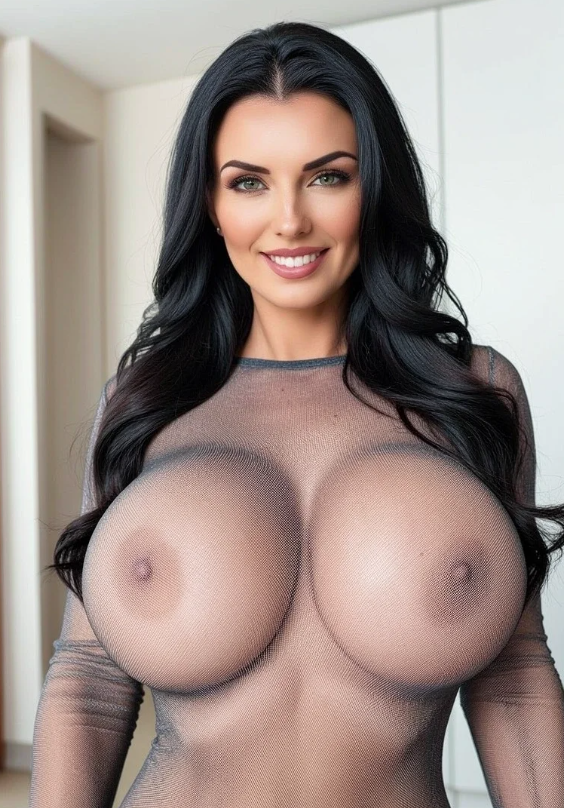
Character consistency is not one magic keyword. It is a hierarchy: a stable identity, a controlled scene and a deliberate camera. When those layers are kept separate, you can change the setting without accidentally creating a different woman.
Lock the details that should never drift.
Before describing a pose or location, write a compact identity block for your fictional adult character. This is the part you reuse word for word. It should be specific enough to be recognizable, but short enough that the model can prioritize every detail.
Choose a mature age range, face shape, eye color, hairstyle, build and two or three signature traits. A beauty mark, blunt fringe, silver streak or distinctive expression is more useful than a long list of generic adjectives.
- Age
- Fictional woman, 42
- Face
- Oval face, defined cheekbones, green eyes
- Hair
- Long black waves, centered part
- Build
- Curvy, balanced natural proportions
- Signature
- Confident half-smile, small beauty mark
Rule 01If a detail defines who she is, keep its wording unchanged. If it defines what is happening, move it into the scene block.
Build prompts in four clean layers.
A structured prompt is easier to edit than a paragraph of mixed instructions. In a milf porn ai workflow, use the same order every time: identity, scene, camera and finish. This tells you exactly which layer to change when a result is close but not right.
[IDENTITY] Original fictional woman, age 42, oval face, defined cheekbones, green eyes, long black wavy hair with a centered part, curvy natural proportions, confident half-smile, small beauty mark below her left eye. [SCENE] Elegant black evening dress, standing beside a hotel window at blue hour, composed and self-assured mood. [CAMERA] Three-quarter portrait, eye-level camera, 50mm lens, shallow depth of field. [FINISH] Soft window light, realistic skin texture, restrained cinematic color, high detail.
Why it works: the subject stays independent from the setting. You can replace the hotel, wardrobe and camera direction while leaving the identity untouched.
Change one visual decision at a time.

Change the environment. Preserve the face, hair and defining expression.
Do not rebuild the prompt after every generation. A coherent ai generated milf series should begin with a clean anchor portrait: identify what makes the character recognizable, then branch into new scenes. Each change should have a purpose you can evaluate.
Treat the anchor portrait as the visual source of truth. Compare every new frame against the same face shape, hairline, eye color, age cues and signature expression.
When you test a new location or wardrobe, copy the identity block without rewriting it. Change the scene instructions first and leave the camera language stable until the character still feels familiar.
If she stops looking like the same person, return to the last successful frame. Correct the first point of drift instead of adding more adjectives to the entire prompt.
- 01
Create an anchor frame.
Use simple lighting, a clear face and a neutral pose. This is your visual reference—not necessarily the final image.
- 02
Save the exact identity block.
Do not casually swap synonyms. “Black wavy hair” and “dark loose curls” may sound similar to a person but can produce a different character.
- 03
Change only the scene layer.
Test a new room, outfit or mood while preserving identity, camera distance and finish. Once the face remains stable, vary the camera.
- 04
Compare before refining.
Review face shape, eye color, hairline, age cues and proportions. Correct the first point of drift rather than adding more description everywhere.
Fix the cause—not the whole prompt.
Shorten the scene and repeat the strongest facial anchors near the beginning. Avoid conflicting style references.
Use precise mature traits—defined features, subtle expression lines and age-appropriate styling—rather than relying on the word “mature” alone.
Describe the full figure and camera distance together. Extreme lens angles can override otherwise clear proportion language.
Reduce beauty adjectives. Add one believable light source, natural skin texture and a physically coherent environment.
Use the strongest still as your video brief.
Image-to-video works best when the starting frame already contains a stable face, clear hands and enough room for movement. Keep the first motion prompt simple: one subject action, one expression change and one camera behavior.
For example: “She slowly turns toward the window, her half-smile softens, and the camera makes a subtle push-in.” Generate short versions, compare face stability and background behavior, then refine only the weakest element.
Identity stays.
The scene moves.
Write one compact identity block. Separate it from scene and camera direction. Make controlled changes, compare against an anchor frame and move into video only after the still image is stable.
Create your character →